Showing posts with label justice. Show all posts

Thursday, August 11, 2022

Phil 302 - Anonymity and Justice

 Anonymity and Justice

There is no universally agreed-upon definition of justice.  Since humanity and various cultures hold different meanings of justice and injustice, the Ring of Gyges thought experiment can be leveraged to explore this topic and how it still plays out in modern society.  The movie Batman Begins offers multiple character examples of how anonymity is like wearing the Ring of Gyges, and how anonymity is used to commit injustices as well as to fight injustices.  Perhaps anonymity simply demonstrates the on-going challenge of defining justice and Heraclitus’ claim that “strife is justice” and “war is father of all” aptly sums up the problem (Graham).  Or perhaps there is a lesson to be learned in empathy in how to apply justice by way of another thought experiment called the empathy machine (Groothuis).  Thought experiments like the Ring of Gyges and the empathy machine, and movies like Batman Begins, are valuable because they prompt discussion and dialogue of what it means to be just and how to act accordingly.

Glaucon and Socrates discuss the concept of justice in book two of  Plato’s Republic.  Glaucon contends that the just person would ultimately run the same course as an unjust person.  He explains through the thought experiment, called the Ring of Gyges, that the wearer of the ring could become invisible and commit any act they wish; and subsequently a person claiming to be just would ultimately commit injustice if granted invisibility (Plato, et. al., 359c – 361a).  Does anonymity make everyone unjust?  Or are there examples of people who use anonymity to fight injustice.  The film Batman Begins offers insight into various characters who have the power of quasi-anonymity.

Batman Begins is a 2005 film which explores the origins of the comic book hero Bruce Wayne, whose parents were murdered when he was a boy (Nolan).   When Bruce was a college student, the murderer of his parents, Joe Chill, was to be released on parole.  At the hearing, Bruce comes prepared with a handgun with the intent to kill Chill.  He is about to shoot Chill, when an assassin for the mobster Falcone, kills Chill.  Bruce watches intently as Chill dies.  Later, his close friend, Rachel Dawes, discovers Bruce’s intent.  When she learns this, she slaps him across his face, telling him that his father would be ashamed of him for bypassing the justice system.  Feeling the sting of shame, Bruce vows to fight injustice by immersing himself in the criminal underworld for seven years.

While exploring the criminal underworld, Bruce is recruited by a man named Henri Ducard, who belongs to the League of Shadows and whose leader is Ra’s al Ghul.  As a member of the League of Shadows, Bruce learns martial arts and arts of deception and disguise.  At the pinnacle of his initiation, he is forced to decide whether to behead a murderer or part ways with the league.  Having determined that he would never kill, he escapes the League of Shadows, saving his friend Ducard and thinking that Ra’s al Ghul dies in a fire at the home of the League of Shadows.

Bruce returns to his home in Gotham and crafts his alter-persona: Batman.  As he assumes anonymity, he begins to fight the Gotham criminal underworld, using his quasi-invisibility to exact justice on the mobsters of Gotham.  Through the course of his detective work, he learns that Ra’s al Ghul still lives, and in fact, is his friend Ducard.  Ra’s al Ghul and the League of Shadows have plotted to destroy Gotham, intending to commit injustice.  Batman fights Ra’s al Ghul, who dies in a train wreck, and subsequently, Gotham is saved.

Both the protagonist and antagonist of Batman Begins wrap themselves in invisibility and disguise.  Bruce Wayne does so to fight injustices on the streets of Gotham which the police department is powerless to fight because of corruption.  Bruce’s choices demonstrate that a cloak of invisibility does not align with Glaucon’s contention that a proverbial Ring of Gyges corrupts the wearer.  On the other hand, while the antagonist Ra’s al Ghul has a warped sense of justice by destroying everything to force civilization to reboot, he is willing to commit significant injustices to accomplish some justice in the world.  Ra’s al Ghul is an example of what Glaucon contends: that invisibility only encourages the person to commit injustices.

It does not take much imagination to make the leap from the fiction of Batman Begins to the non-fiction of the real world.  Today, cyber criminals and malicious actors work in hidden shadows and the dark web to steal people’s identities and commit all types of injustices from buying and selling drugs to human trafficking.  Also cloaked in anonymity and invisibility are justice warriors from governments and military organizations and even vigilantes.  Like Batman, the cyber world is full of invisible actors, many committing grave crimes, and others, such as vigilantes, fighting them in the name of justice (e Silva).

Is Glaucon’s thought experiment, resolved?  Does invisibility turn all people into actors of injustice?  Applying the analysis of Batman Begins and the battles being fought on the Internet, it can be stated that invisibility does not turn all into actors of injustice.  Therefore, what is to be learned from this thought experiment?  Perhaps the real lesson from Batman Begins and the gift of anonymity is that it reveals humanity will always be locked in a struggle to define what is just and unjust.  What happens overtly also occurs anonymously as the fight for justice and against injustices simply moves to a meta world.  Consequently, when Heraclitus says, “We must recognize that war is common, strife is justice, and all things happen according to strife and necessity” and that “war is father of all and king of all” it simply denotes the endless fight over the definition of justice (Graham).  Ra’s al Ghul felt compelled to fight injustice in his own way, and in turn Batman felt compelled to fight Ra’s al Ghul and the criminal underworld.  Humanity is trapped in a perpetual struggle to define and execute justice and how to fight injustice.  But is humanity truly trapped in this unending battle?

To begin to address injustice, all people need to gain self-awareness and empathy.  One University of Sydney academic philosopher wrote, “invisibility may be self-induced through self-justifying rationalizations, and ignorance may be manifested and expressed as lack of self-reflection and self-knowledge” (Edward, 564).  This idea of ignorance and lack of self-examination and reflection may be key to unlocking a universal understanding of justice.  What if justice began with self-examination and reflection?  If more people were to be instilled with empathic awareness, could humanity step closer to universal justice?  Two scenes from Batman Begins show two characters with a sense of empathy and how these acts of kindness had knock-on effects.

One scene shows a young Bruce at the police station, shortly after his parents were murdered by Chill.  With empathy and kindness, a police officer named James Gordan took time to think of the feelings of a frightened child.  His act was to simply put a coat around the young boy and offer comfort.  Later in the film, in difference scene, the hero similarly shows empathy for a young boy whose life is full of stress.  While surveilling a rough part of the city, a young boy walks onto the balcony to leave a heated argument between his parents.  To his surprise, he sees Batman on the terrace.  He explains to Batman that none of his friends would believe him if he told them he saw Batman.  Without saying a word, Batman hands the boy a surveillance tool and the boy breaks out in a wide, happy expression.  Having the ability to understand what it feels like to be in another person’s shoes and then to treat that person, accordingly, may be the right thought experiment to advance the conversation of justice.

One professor of philosophy proposes that moral virtue, including justice, may be better understood with a thought experiment called the empathy machine.

When one is hooked up to the empathy machine, there is a radical shift from the third-person and second-person to the first-person; from propositional knowledge to experiential knowledge … from hearing about pain and observing pain to being in pain and thus knowing it from the inside out. It is a shift from hearing-about or being-near to being-there (Groothuis, 86).  

Experiencing the pains of injustice may begin to shape humanity to reconsider actions which may be unjust.  Instead of allowing baser instincts of protection, revenge and survival to guide humanity, perhaps there ought to be greater focus on tapping into emotional intelligence in an effort to expand not only self-awareness, but other-awareness.

While humanity may long argue over what justice is and is not, the thought experiments of the Ring of Gyges and the empathy machine, along with the plot of Batman Begins help to sort out how humanity can apply justice at the interpersonal level.  Indeed, Heraclitus may always be correct about humanity being trapped in a perpetual cycle of strife and war.  Or, perhaps there may be some hope in a more enlightened civilization, in which the citizenry taps into the rich potential of empathy and reaches escape velocity from the ceaseless cycle of conflict. 

Works Cited

e Silva, K. K. “Vigilantism and Cooperative Criminal Justice: Is There a Place for Cybersecurity Vigilantes in Cybercrime Fighting?” International Review of Law, Computers & Technology, vol. 32, no. 1, Mar. 2018, pp. 21–36. EBSCOhost, https://doi-org.ezproxy1.apus.edu/10.1080/13600869.2018.1418142.

Edward, Howlett S. "The Sixth Estate: Tech Media Corruption in the Age of Information." Journal of Information, Communication & Ethics in Society, vol. 18, no. 4, 2020, pp. 553-573. ProQuest, https://www-proquest-com.ezproxy1.apus.edu/scholarly-journals/sixth-estate-tech-media-corruption-age/docview/2499028149/se-2, doi:https://doi-org.ezproxy1.apus.edu/10.1108/JICES-02-2020-0014.

Graham, Daniel W. “Heraclitus (Stanford Encyclopedia of Philosophy).” Stanford.edu, 2019, plato.stanford.edu/entries/heraclitus/.

Groothuis, Douglas. "THE EMPATHY MACHINE: A THOUGHT EXPERIMENT." Think, vol. 19, no. 55, 2020, pp. 85-94. ProQuest, https://www.proquest.com/scholarly-journals/empathy-machine-thought-experiment/docview/2384820659/se-2, doi:https://doi.org/10.1017/S1477175620000081.

Nolan, Christopher. Batman Begins. Warner Bros., 2005. 

Plato, et al. A Plato Reader : Eight Essential Dialogues. Hackett Pub. Co, 2012.

Sunday, March 6, 2022

Rawlsian Justice - What Would You Do in the Original Position?

The week of February 28 to March 6 had this topic for our discussion assignment:

Rawlsian Justice

John Rawls claims that justice comes down to a notion of fairness. He proposed a thought experiment wherein he proffers an ideal “original position.” The idea is that representatives of the people operate behind a “veil of ignorance” when determining what policies are in the best interests of all of the citizens. In brief, representatives are ignorant of their “The race, ethnicity, gender, age, income, wealth, natural endowments, comprehensive doctrine, etc. of any of the citizens in society, or to which generation in the history of the society these citizens belong” and “The political system of the society, its class structure, economic system, or level of economic development” (Wenar 4.6). They do understand different people have different life plans, that even if resources are scarce, “there is enough to go around,” and have good common sense.

Discussion task: Imagine you are a representative behind this veil. Discuss and defend several measures you would take to ensure a fair and equitable redistribution of resources.

Wenar, Leif, "John Rawls", The Stanford Encyclopedia of Philosophy  Edited by Edward N. Zalta 9 January 2017. https://plato.stanford.edu/entries/rawls/

And my response:

If I were on this "original position" committee, and if I were tasked with the development and structure of a society that would ensure the fair and equitable distribution of resources, I think I would break it down into a couple of macro steps.

First - we do not live in a totally unconstrained world no matter who states this assumption.  It is fundamentally sound to assume that humans cannot live beyond the laws of physics and constraints of this world, else we might as well assume the original position is one where we are all immortal gods and with unlimited constraints.  Therefore, the first task would have two parts, to determine absolute needs and what the world's resources can support.

Part one - determine the fundamental necessities of the individual human.  This would comprise a summary and list of all the things a person needs to live and have a basic, common life.  The list would include daily food and water intake to sustain a healthy life, without scarcity and without indulgence.  This list also ought to be comprised of a variety of foods so as to not place undue torture on the individual.  The list would also include a common variety of clothes, shelter, transportation needs, personal hygiene, medical care, education requirements, a stipend for some travel and entertainment and multiple ways the person could work to support the common good.  In a sense, part one would be the sum total an individual would consume from and produce for society.

Part two - determine what this world can support in terms of raw resources (excluding human capital).  Determining the sum total of raw resources in the world, and then dividing by the requirements list from part one; this should yield some number of individuals the world can support (i.e. 10 billion people).

Second - for this equation to remain in balance, the variable of individual human desires would need to be kept constant.  Once the list of necessities is set, it is crucially dependent on the desires of individuals to remain constant over a lifetime.  Alternatively, the equation could assume a set number of years for an individual and this set number of years multiplied by the yearly consumption of a lifetime of needs of an individual would yield a 'lifetime consumption number.'  The individual, in theory, could draw down from this number at an even pace, or a slower pace or a quicker pace.  Depending on the rate of drawdown, the person's expiration date (the day they die), could come sooner or later than the average.  The same type of analysis would have to be done for the person's output number.  The consumption and production numbers for the individual would need to be kept in balance.

Society would have to strictly adhere to the 'lifetime consumption number' expiration as well as ensure the individual meets their output number.  As soon as a person has consumed her number and met her output number, she must submit to exiting mortality, else society risks the equation falling out of balance and injustice ensues.  In the situation where a person who dies 'too early' and therefore does not use up all their consumption number and does not meet their production number, the governing body would need to determine how it impacts the overall balance of the system, which could potentially cause a ripple effect of injustice for those people who remain living.

To facilitate the individual's knowledge of their draw-down rate, each person in the world would have to go through some sort of mandatory philosophy class to constrain the human's unlimited drive for desires.  As we see in the real world, some individuals possess an uncanny drive and knack to acquire fame, money and power (i.e. political leaders, entrepreneurs, tyrants, entertainment people, mobsters, thieves and murderers).  A cultural shift away from the desire to pursue boundless wealth, power, money and fame, would have to be inculcated in people to ensure the on-going, fair distribution of the world's finite resources.  Many freedoms and trade would have to be restricted, or a strong educational program would have to be instilled in people from a young age to prevent the need of restricted freedoms and trade.

As not all individuals are born with the same inherent qualities and talents and natural inclinations, this system would have to figure out a way to determine the total lifetime consumption needs of an individual, as well as what this person is capable of producing.  For example, a 6'5, 300 lb. man, born as the last child of seven kids would require more food and clothes and possible produce less than a 4'5 110 lb. woman who was born as the oldest child in a family of 12.  Regardless, each individual's consumption and output would need to be accounted for.  In the long run, perhaps society would genetically drift toward an average build, and the unique calculation of consumption and output would no longer be needed.

As not all regions on the world are the same, there may need to be differences in the consumption and production of individuals between differing regions.  A region near the equator would potentially have few needs in clothing, compared to a region near one of the poles.  Similarly, the requirement for food consumption might differ, as well as the type of food needed to survive and live in the various regions.

The leaders of the society must absolutely live in the same fashion as individuals and citizens.  Any variance between leaders and citizens would cause an unbalancing effect and destroy the entire system.  No special treatment can be given to any one individual no matter the circumstances or justification.

In sum, the major policies I would put in place, in support of justice and fairness for all citizens would be:

  • Education for people to learn what their common needs and talents are; how they draw down and support the common good.
  • As part of that education, a strong emphasis in philosophy and the management of desires would need to take a significant portion.  This education would need to dissuade people from pursuing fame, wealth and power.
  • Science programs would be tasked with understanding what the world can support and what people need to exist.
  • Government administrators and leaders would live exactly like citizens, with no special treatment, access or favors afforded to them.

Friday, October 8, 2021

Letters from a Stoic 113 - On the Vitality of the Soul and Its Attributes

On the Vitality of the Soul and Its Attributes

The letter answers the question: are virtues living things?  In sum, Seneca replies they are not; the soul is a living thing, which possesses virtues.  He discusses this somewhat extensively, and then ends the letter with some thoughts on bravery and discipline.

Seneca doesn't think talking about this question is a good use of time, but nonetheless answers it.

You wish me to write to you my opinion concerning this question, which has been mooted by our school – whether justice, courage, foresight, and the other virtues, are living things.  By such niceties as this, my beloved Lucilius, we have made people think that we sharpen our wits on useless objects, and waste our leisure time in discussions that will be unprofitable.

He gets directly to the answer.

The soul, men are agreed, is a living thing ... But virtue is nothing else than a soul in a certain condition; therefore it is a living thing. Again, virtue is active, and no action can take place without impulse. And if a thing has impulse, it must be a living thing.

The soul is a living thing with impulses.  Virtue is active and prompts us to have an impulse, which we then act on.

We may have multiple virtues (or vices) in our soul, but we are still one living soul.  Just like the hydra has many heads, it is still one soul.

each separate head fighting and destroying independently. And yet there is no separate living thing to each head; it is the head of a living thing, and the hydra itself is one single living thing.

Later in the letter, Seneca repeats and succinctly states his answer to the main question.

Every living thing acts of itself; but virtue does nothing of itself; it must act in conjunction with man. All living things either are gifted with reason, like men and gods, or else are irrational, like beasts and cattle. Virtues, in any case, are rational; and yet they are neither men nor gods; therefore they are not living things.

To conclude the letter, he makes the very important point that use of knowledge is what matters; not discussing and nitpicking.  He focuses on the virtue of bravery to make this point.

Teach me, not whether Bravery be a living thing, but prove that no living thing is happy without bravery, that is, unless it has grown strong to oppose hazards and has overcome all the strokes of chance by rehearsing and anticipating their attack.

What is bravery?

It is the impregnable fortress for our mortal weakness; when a man has surrounded himself therewith, he can hold out free from anxiety during life's siege.

He quotes Posidonius:

"There are never any occasions when you need think yourself safe because you wield the weapons of Fortune; fight with your own! Fortune does not furnish arms against herself; hence men equipped against their foes are unarmed against Fortune herself."

Then he focuses on Alexander the Great, who conquered nations, but could not conquer himself and ended up killing his own friends.

he, the conqueror of so many kings and nations, was laid low by anger and grief! For he had made it his aim to win control over everything except his emotions.

Seneca writes a few, excellent reminders, which we all would do well to repeat to ourselves often.

Self-Command is the greatest command of all.

...

I must be just without reward.

...

May I take pleasure in devoting myself of my own free will to uphold this noblest of virtues.

...

Those who wish their virtue to be advertised are not striving for virtue but for renown.

Monday, August 9, 2021

Letters from a Stoic 93 - On the Quality, as Contrasted with the Length, of Life

On the Quality, as Contrasted with the Length, of Life

The gist of this letter is found in this quote:

We should strive, not to live long, but to live rightly; for to achieve long life you have need of Fate only, but for right living you need the soul.

This is the response to anyone who suggests that someone who has died before their time; and it serves as a reminder to live each day as if it were your last.

Seneca notes,

I have noticed many who deal fairly with their fellow-men, but none who deals fairly with the gods. We rail every day at Fate.

A great many things in life may seem unfair, but we should stop this line of thinking before we jump to that conclusion.  It is we who assume things are unfair, when in fact, this is how the Universe operates.  Is it fair that my home flooded or burned down?  Is it fair that the world is warming up or cooling down too much to my liking?  Is it fair that weeds exist and are in my yard?  Is it fair that my knee locked up, while playing basketball, and I hyper-extended it?  Is it fair that my parent dies at the age of 45 or my Marine son dies in his 20s?

Be mindful of jumping to the conclusion of 'what is fair and what is not.'  The Cosmos is too complex for one person to conclude what is just and what is not.  This topic comes up quite a bit in life.  For my part, I like to recall the story of "The Farmer's Son: Fortune or Misfortune?" as found on my hypomnemata on wisdom.

Seneca continues,

do you consider it fairer that you should obey Nature, or that Nature should obey you? And what difference does it make how soon you depart from a place which you must depart from sooner or later?

He then explains what a good life represents, as opposed to the length of life.

rendered to itself its proper Good ... assumed control over itself ... had fulfilled all the duties of a good citizen, a good friend, a good son.

Life must be measured by the performance of good, rather than the length.  A perfect circle is still perfect regardless of it's diameter.

a life of small compass can be a perfect life. Age ranks among the external things.  How long I am to exist is not mine to decide, but how long I shall go on existing in my present way is in my own control.

A full life is one that has attained wisdom.

It is living until you possess wisdom. He who has attained wisdom has reached, not the furthermost, but the most important, goal.

One who lives wisely has fulfilled the measure of his creation.

for he has paid [Nature] back a better life than he has received. He has set up the pattern of a good man, showing the quality and the greatness of a good man. Had another year been added, it would merely have been like the past.

If a person lives 80 years, and does nothing but eat, sleep, drink, defecate and does hardly anything rational to improve himself or others, he is no better than an animal.  But one who lives a mere two decades, and who exercises rationality and lives morally, ethically to the betterment of himself and in the service of others, we will applaud the latter and forget the former.

Ask yourself why that is.

Death visits each and all; the slayer soon follows the slain.

We all die regardless.  It is how we spend the time allotted to us is what matters.

Wednesday, November 4, 2020

Letters from a Stoic 31 - On Siren Songs

On Siren Songs

Fads, trends, populism, crowd favorites - I've tried to be leery of what the majority desires.  If only the majority were in favor of justice for all, temperance, courage and wisdom, then perhaps I would willingly go along with the crowd.  But usually what the crowd desires is not wise, but foolish.  They will choose the well-worn, popular path.  For this reason, I think, Seneca approves of the "impulse which prompted" Lucilius to "[tread under feet] that which is approved by the crowd.

The phrase "tread under feet" seems to mean to ignore, or oppress or put down.  Therefore, Seneca approves of the idea of going against the crowd, as long as that means one is living philosophically.

He compares the desires of the crowd to a siren song.  Odysseus had to plug the ears of his men so they would not hear the siren song, lest they succumbed to it and dash their ships into the rock.  Similarly, we must plug our ears to the calls of the crowd, which are everywhere!

the song, however, which you have to fear, echoes round you not from a single headland, but from every quarter of the world. Sail, therefore, not past one region which you mistrust because of its treacherous delights, but past every city. Be deaf to those who love you most of all; they pray for bad things with good intentions. And, if you would be happy, entreat the gods that none of their fond desires for you may be brought to pass. What they wish to have heaped upon you are not really good things; there is only one good, the cause and the support of a happy life, – trust in oneself.

Seneca warns that we must be deaf even "to those who love you most all."  What an odd thing to say.  I presume that what he means is that those who love us most, may not have embraced philosophy, and therefore, when they pray for you, they are praying that you become famous, rich, handsome, healthy or some sort of indifferent.  Or they may be praying that you don't die or become ill or fall on so-called misfortune.  Therefore, Seneca says that if you really want to be happy, plead with the gods that your loved ones' prayers are not answered.

I'm not so sure how sound this advice from Seneca is.  I'm not so sure a practicing Stoic would forbid his loved ones to pray for such things, nor would he go out of his way to pray to the gods to not answer the prayers of his loved ones.  At best, a practicing Stoic may be completely nonplussed by such prayers and would not worry if those things came (or not) into his life.  He would view them as indifferents regardless if they came (or not) due to prayers from a loved one or otherwise.

The next part of the letter delves into the subject of work; and I assume he means the subject of gainful employment.  Work, itself, is an indifferent.  Therefore, work can be infused with either virtue or vice.  A practicing Stoic, then would attempt to make his work noble.

Make yourself happy through your own efforts; you can do this, if once you comprehend that whatever is blended with virtue is good, and that whatever is joined to vice is bad. Just as nothing gleams if it has no light blended with it, and nothing is black unless it contains darkness or draws to itself something of dimness, and as nothing is hot without the aid of fire, and nothing cold without air; so it is the association of virtue and vice that makes things honourable or base.

Knowledge of how to make good use of things (indifferents) is the art of philosophy.  The good, therefore, is knowledge.  And evil is lack of knowledge.  Your human craft is to gain knowledge about how to be a good human.

Just as a carpenter learns to work with wood and there are varying degrees of craftsmanship in different carpenters due to knowledge and practice (as well as lack of knowledge and practice), so too we can apply this analogy to what it means to be a good human being.  A good human will seek justice for all (not only justice for some, and not at the expense of others' justice).  A good human being will be disciplined and temperate in eating, entertainment, learning and working.  A good human being will demonstrate courage and honesty.  A good human being learns and demonstrates wisdom.  The medium for the carpenter is wood.  The medium for a human being is work and life.

in order that virtue may be perfect, there should be an even temperament and a scheme of life that is consistent with itself throughout; and this result cannot be attained without knowledge of things, and without the art which enables us to understand things human and things divine. That is the greatest good. If you seize this good, you begin to be the associate of the gods, and not their suppliant.

The 'art' he refers to is philosophy.  If we learn and practice this art, we become equal with the gods.  It does not matter our lot in life, the choice we have is our response to our lot and circumstances in life.  Is our soul worthy to the challenge?  Will you take the path less travelled or will you follow the crowd?

The unique part of *you* has a choice, regardless of circumstances.

What we have to seek for, then, is that which does not each day pass more and more under the control of some power which cannot be withstood. And what is this? It is the soul, – but the soul that is upright, good, and great. What else could you call such a soul than a god dwelling as a guest in a human body? A soul like this may descend into a Roman knight just as well as into a freedman's son or a slave. For what is a Roman knight, or a freedman's son, or a slave? They are mere titles, born of ambition or of wrong. One may leap to heaven from the very slums. Only rise

"And mould thyself to kinship with thy God."

Monday, February 12, 2018

Commentary on Meditations: B11:20

All the elements of air and fire that are mingled in you have a natural tendency to rise, but nevertheless obey the dispensation of the Whole and are kept waiting here in the compound of the body. And all the elements of earth and water in you, whose tendency is to sink down, are nevertheless raised up and stay in a position unnatural to them. So even the elements are obedient to the Whole: assigned their place, they are forced to stay there, until the signal authorizing their dissolution once more is given from that same source.

So is it not strange that it is only your intelligent part which rebels and complains of the place given it? And yet there is nothing forced on it, only what accords with its own nature. But still it refuses to comply, and sets off in the opposite direction. Any movement towards acts of injustice or self-indulgence, to anger, pain, or fear is nothing less than apostasy from nature. Further, whenever the directing mind feels resentment at any happening, that too is desertion of its proper post. It was constituted not only for justice to men but no less for the reverence and service of god - this also a form of fellowship, perhaps yet more important than the operation of justice.

The elements don't rebel against their nature.  They each have a job to do and they do it.  Elements in the human body, such as carbon and water, carry out their mission.  They stay composed and "keep" the human body in its form.  Then when the signal is made (death), they dissolve.  They simply carry out their mission and do not rebel.

Now, let's talk about what makes humans unique.  We have this rational mind that has all sorts of tugs and pulls at it.  A lot of these tugs and pulls have to do with things that are not under our control.  We may complain it is too cold or too hot (it's out of our control).  We begin to worry about having to deal with a certain person at work (it's out of our control).  We get angry when someone cuts us off in traffic or is talking loudly in a movie theater (it's out of our control).  We fear we will lose all our money in the stock market (it's largely out of our control).  Our duty, as humans, is to focus on things that are in our control (our attitude, our love of virtue, helping other people).  And our duty with regard to all those other things, is to love it - to love what comes our way.  In summary, if we focus on becoming more disciplined in our desire (love our fate) and if we focus on becoming disciplined in our proper, right actions (love and help for others), then we are doing our duty as rational, social beings.

Tuesday, January 23, 2018

Commentary on Meditations: B10:15-18

The time you have left is short. Live it as if you were on a mountain. Here or there makes no difference, if wherever you live you take the world as your city. Let men see, let them observe a true man living in accordance with nature. If they cannot bear him, let them kill him - a better fate than a life like theirs.

No more roundabout discussion of what makes a good man. Be one!

Keep constantly in your mind an impression of the whole of time and the whole of existence - and the thought that each individual thing is, on the scale of existence, a mere fig-seed; on the scale of time, one turn of a drill.

Consider any existing object and reflect that it is even now in the process of dissolution and change, in a sense regenerating through decay or dispersal: in other words, to what sort of 'death' each thing is born.

Life is short.  Some will spend what little time they have left, filling their life with pleasures and desires.  Stoics spend what little time they have left, trying to practice courage, temperance, carrying out justice and living wisely.  Stoics will live this way whether living in a city or on a mountain - it makes no difference.  The world is their city.  To put this thought in modern day vernacular: the world is my safe zone.  So many try to cut out a "safe zone" where they won't or can't be hurt.  But by so doing, they cheat themselves of precious learning experiences.  The world should be your safe zone - interact with everyone - treat everyone with respect and kindness - teach and help others to see wisdom.  Marcus goes so far as to say that if the world can't bear you, then let it kill you!  It's better to die free than live in slavery.

While you live - while you can - be a good man now!

Never, ever forget the little speck of dust you dwell on; and the minute speck of time you occupy in eternity.  This puts everything in proper perspective.

Everything is in the process of changing and dying.  Each second, minute, hour, day we march closer to decay and dissolution.  Life is short.  Use your time now to be a good human.

(see also Citadel p. 171, 291)

Sunday, January 21, 2018

Commentary on Meditations: B10:11-12

Adopt a systematic study of the way all things change into one another: pay constant attention to this aspect of nature and train yourself in it. Nothing is so conducive to greatness of mind. One so trained has divested himself of his body: recognizing that in almost no time he will have to leave all this behind and depart from the world of men, he has devoted his entire self to justice in his own actions and to the nature of the Whole in all things external. He does not even give a thought to what others will say or suppose about him, or do against him, but is content to meet these two conditions - his own integrity in each present action, and glad acceptance of his present lot. He has abandoned all other preoccupations and ambitions, and his only desire is to walk the straight path according to law and, in so doing, to follow in the path of god.

What need of prompt or hint when it is open to yourself to discern what needs to be done - and, if you can see your way, to follow it with kind but undeviating intent. If you cannot see the way, hold back and consult your best advisers. If some other factors obstruct this advice, proceed on your present resources, but with cautious deliberation, keeping always to what seems just. Justice is the best aim, as any failure is in fact a failure of justice. A man following reason in all things combines relaxation with initiative, spark with composure.

If you constantly recognize how much and how often things and people change, you really begin to see how fragile and fleeting this life is.  There are a couple of reactions to this: you may decide life and all in it is just a joke and you're going to go do whatever you want - sex, drugs, rock and roll!!  Or maybe you decide that so much in life really isn't important, and therefore what you should devote yourself to is virtue - justice, wisdom, courage, temperance.  And you won't care what others say or think about you, because you know that you have found real truth and you are focused on what truly matters.  You have found the one path that matters and your only desire is to follow it - to follow the true, undeviating nature - the one that won't disappoint you at the end of it all.

Now that you have found the way - you have dug deep and have found solid rock - you should not need to be reminded and prompted as to what you should do.  If, however, you come at a crossroads, you should have enough information to decide which path to take.  But if not, then seek advice from "your best advisers."  But if even your best advisers cannot help, then proceed with what information you have.  If your decision is defensible in the context of justice, what more can you ask for?  At ease, but with initiative; a spark of action, but under control and with composure.

(see also Citadel p. 209-210)

Thursday, December 14, 2017

Commentary on Meditations: B8:38-42

If you have sharp sight, use it: but, as the poet says, add wise judgement.

In the constitution of the rational being I can see no virtue that counters justice: but I do see the counter to pleasure self-control.

If you remove your judgement of anything that seems painful, you yourself stand quite immune to pain. 'What self?' Reason. 'But I am not just reason.' Granted. So let your reason cause itself no pain, and if some other part of you is in trouble, it can form its own judgement for itself.

An obstacle to sense perception is harmful to animal nature. An obstacle to impulse is likewise harmful to animal nature. (Something else will be similarly obstructive and harmful to the constitution of plants.) It follows that an obstacle to the mind is harmful to intelligent nature. Now apply all this to yourself. Is pain or pleasure affecting you? That is for the senses. You have formed an impulse and then met some obstruction? If this was an unconditional aim, then, yes, the obstruction harms your rational nature: but if you accept what is common experience, no harm is yet done or hindrance caused. You see, no one else will impede the proper functions of the mind. The mind cannot be touched by fire, steel, tyranny, slander, or anything whatever, once it has become 'a perfect round in solitude'.

I have no cause to hurt myself: I have never consciously hurt anyone else.

If you are going to judge, then judge well.

There appears to be some debate about what justice is.  Kids seem to have a concept of justice in that they want to ensure fairness is enforced.  But therein lies the rub: what is fair?  Being kind and selfless to others is a start.  If you have some candy and are eating it in front of others, it would be kind and just to offer to share it.  If you have four children and you give one a birthday present, it's only fair that you give a present to the other three on their birthday too.  And the present ought to be special to them and you ought to put some thought into it.  Carrying out justice on a micro and macro scale is not an easy task.  Often when one person tries to carry out justice, another person thinks it unfair.  So what is to be done with exercising the virtue of justice?  Learning and talking about it is a start.  Debating examples and finding a golden mean is also a worthy exercise.  In any case, putting some thought and logic and rationale behind your judgement and action is always a good idea.

From passage 40 in Book 8, Marcus says that judgement about pain makes it so.  You can be immune to pain if you change your opinion.  This week, on Reddit, I read a quote from Seneca that said something very similar.
"But do not of your own accord make your troubles heavier to bear and burden yourself with complaining. Pain is slight if opinion has added nothing to it; but if, on the other hand, you begin to encourage yourself and say, "It is nothing, – a trifling matter at most; keep a stout heart and it will soon cease"; then in thinking it slight, you will make it slight. Everything depends on opinion; ambition, luxury, greed, hark back to opinion. It is according to opinion that we suffer" -Seneca, Moral Letters
In passage 41, Marcus continues the logic behind how true pain is all opinion.  No one or no thing can harm your mind or your opinions.  Your mind and the opinion you form are your own and they are in your control.  It is a breath of fresh air to think the mind truly cannot be touched by "fire, steel, tyranny, slander or anything whatever, once it has become 'a perfect round in solitude.'"  Getting to that point is not so easy, though.

Next, Marcus reminds himself of his duties to others and to himself.  No harm needed for either.

(see also Citadel p. 41, 103, 270, 287)

Wednesday, October 25, 2017

Commentary on Meditations: B6:46-47

Just as all the business of the amphitheatre and such places offends you as always one and the same sight, and this monotony of the spectacle bores you, so it is too with your experience of life as a whole: everything, up or down, is the same, with the same causes. How much longer, then?

Think constantly of all the sorts of men, of various professions and of all the nations on earth, who have died: and so bring your thought down to Philistion, Phoebus, and Origanion. Pass now to the other classes of men. We too are bound to change our abode to that other world, where there are so many skilled orators, so many distinguished philosophers - Heraclitus, Pythagoras, Socrates - so many heroes of old, so many later commanders and kings.

Add Eudoxus, Hipparchus, Archimedes; add other men of penetrating intellect, men of great vision, men dedicated to their work; add rogues, bigots, and even satirists of this transient mortal life, like Menippus and his kind. Reflect of all of these that they are long dead and buried. So is this anything terrible for them - or indeed for men whose very names are lost? In this world there is only one thing of value, to live out your life in truth and justice, tolerant of those who are neither true nor just.

Marcus speaks to me!  I cannot help but see, on every side, the "business of the amphitheater."  Star athletes and movie stars and the drama that follows them ad nauseam on TV and the Internet.  Observing high school students and listening to their conversations is also revealing - about the repetitive topics, the endless selfies and the total lack of living an examined life.  I am convinced more and more of Marcus' opinion that forty years is as good as ten thousand years of seeing all that can happen in this life (B7.49 & B11.1).

While Marcus reminds us to not get worked up into a frenzy, nor be bothered by the business of the amphitheater, it is always wise to recall that everyone passes on to death and oblivion.  Pillars of men and nations disappear and succumb to The Agent of Change.  What's left?  What's the purpose?  What is it all about?  For the Stoics, tt is about attaining a life of moral excellence or virtue.  Is living a life of wisdom, justice, courage, temperance and other virtues the true purpose of our existence? For the Stoics, the answer is yes. They believe living these virtues is resting on the foundation of bedrock which won't move or shift with the tides of fads and popularity.  For this Stoics, this is the only thing of value.  Pursuit of fame, fortune, notoriety, pleasure / avoiding pain, are all futile and useless endeavors.

(see also Citadel p. 48, 164, 177-178, 228, 242, 276, 286)

Wednesday, July 12, 2017

Commentary on Meditations: B4:18

What ease of mind you gain from not looking at what your neighbour has said or done or thought, but only at your own actions, to make them just, reverential, imbued with good! So do not glance at the black characters either side, but run right on to the line: straight, not straggly.

"Keeping up with the Joneses" - that is a game that is often played in America.  Envy is at the center of this phenomenon.  We let "what others think of us" into our own minds and we let that virus infect us.  We let it distract us and have sway over us.

We ought to focus on improving our own character and helping and serving others.  That is the straight line we ought to pursue.

Friday, July 7, 2017

Commentary on Meditations: B4:12

Always have these two principles in readiness. First, to do only what the reason inherent in kingly and judicial power prescribes for the benefit of mankind. Second, to change your ground, if in fact there is someone to correct and guide you away from some notion. But this transference must always spring from a conviction of justice or the common good: and your preferred course must be likewise, not simply for apparent pleasure or popularity.

Simply put, Marcus admonishes that we should act according to reason and justice; and that we should be willing to listen and heed advice from others when we are about to deviate from acting according to reason and justice.  Be careful of your motivations.

(see also Citadel p. 204, 301)

Wednesday, May 24, 2017

Commentary on Meditations: B3:6

If you discover in human life something better than justice, truth, self-control, courage - in short, something better than the self-sufficiency of your own mind which keeps you acting in accord with true reason and accepts your inheritance of fate in all outside your choice: if, as I say, you can see something better than this, then turn to it with all your heart and enjoy this prime good you have found. But if nothing is shown to be better than the very god that is seated in you, which has brought all your own impulses under its control, which scrutinizes your thoughts, which has withdrawn itself, as Socrates used to say, from all inducements of the senses, which has subordinated itself to the gods and takes care for men - if you find all else by comparison with this small and paltry, then give no room to anything else: once turned and inclined to any alternative, you will struggle thereafter to restore the primacy of that good which is yours and yours alone. Because it is not right that the rational and social good should be rivalled by anything of a different order, for example the praise of the many, or power, or wealth, or the enjoyment of pleasure. All these things may seem to suit for a little while, but they can suddenly take control and carry you away. So you, I repeat, must simply and freely choose the better and hold to it. 'But better is what benefits.' If to your benefit as a rational being, adopt it: but if simply to your benefit as an animal, reject it, and stick to your judgement without fanfare. Only make sure that your scrutiny is sound.

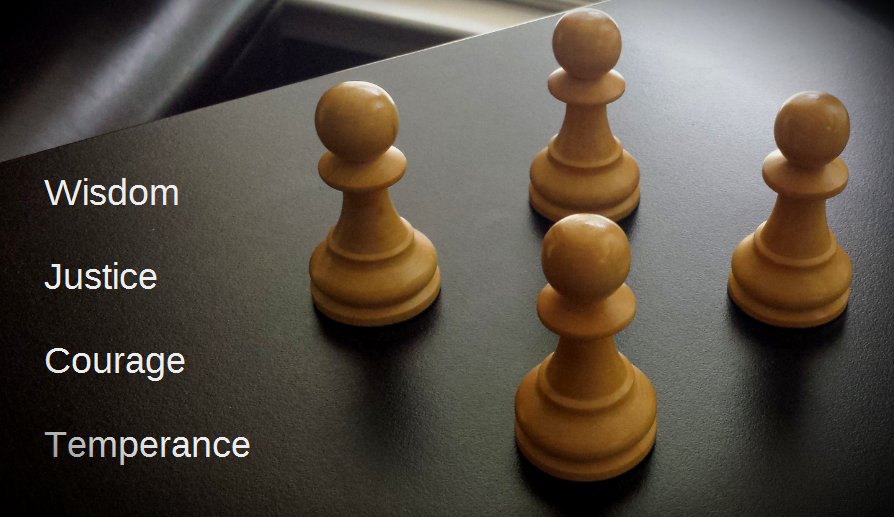
The four virtues, as Marcus notes here are:
- justice
- truth (wisdom)
- self-control (temperance)
- courage

Practicing and living these virtues is how you find contentment and happiness.

Furthermore, practicing the three Stoic disciplines, where are:
- self-sufficiency of your mind (discipline of assent)
- act in accord with true reason (discipline of action)
- accept your inheritance of fate (discipline of desire)

will bring you contentment and happiness.

Marcus boldly tells himself, if he can find anything better than these virtues and disciplines, he should turn to it with all his heart.  But if nothing is better than the god within, which has controlled his impulses and which has helped him scrutinize (examine or inspect closely and thoroughly) his thoughts and has helped him "take care of men", then he should not give any room for other philosophies.

He says it isn't right that rational and social good should be "rivaled" by any different order - such as vanity, power, prestige, money and pleasure.  All these pursuits may bring short-term happiness and joy, but ultimately they control you and carry you away to a place that ends in dejection and a life of emptiness.  (This is why Stoicism wins over Hedonism).

Arriving at this conclusion, what is left?  To "simply" and "freely choose the better and hold to it."

(See also Citadel pp. 124, 179, 186, 237-238, 242, 265)

Wednesday, March 29, 2017

Commentary on Meditations: B1.16 - Marcus' Adoptive Father (Antoninus Pius)

From my [adoptive] father: gentleness, and an immovable adherence to decisions made after full consideration. In other words, be good natured (gentle) and kind.  Think fully and well. Then make your choice.
no vain taste for so-called honours. He was humble and did not 'get a big head' regarding his authority.

stamina and perseverance. He had the ability to stick to something. A more modern and oft-used term is "grit.” One demonstrates grit by not backing down and staying with something to the end.

a ready ear for anyone with any proposal for the common good; to reward impartially, giving everyone their due; experience of where to tighten, where to relax.  As emperor, I’m sure Marcus had lots of people approach him with proposals.  He did his best to execute justice for all; giving people a chance and by giving them a fair shake.
putting a stop to homosexual love of young men. There is not much to say here other than to note Marcus worked on self-discipline.

a common courtesy, excusing his court from constant attendance at dinner with him and the obligation to accompany him out of town, and those kept away by some other commitment always found him no different towards them. Marcus’s adoptive father was not a prima-donna.  He did not demand constant attention.  He was not haughty.

focused and persistent in deliberation in council, never satisfied with first impressions and leaving a question prematurely. I find this counsel good in today's attention-deficit-disorder world, where we can't keep our attention focused on something for more than five minutes.  Marcus learned from his adoptive father to be focused on a task at hand until it was completed.  He was not content with just hearing the talking points; rather he delved into topics and did not leave a question too early.

the concern to keep his friends, with no extremes of surfeit or favouritism. Marcus learned from him to be just with his friends and acquaintances.

his own master in all things, and serene with it. This is another observation related to self-discipline and being content.

foresight for the longer issues and unfussy control of the least detail. This part really rings true for the line of work I’m in.  We call it “having a general interest mindset.” Some people we deal with want to "haggle" about smaller amounts and they lose sight of the bigger picture.  For example, on a $1 million project, there is no point in chasing down ten-dollar issues. Or, in another example, rather than taking a hard stance on a feature which will only benefit a subset of customers for little to no value, one can agree to align with other stakeholders in order to keep the general interest united.

the check he put in his reign on acclamations and all forms of flattery. He did not let power get to his head and did not succumb to flattery.

his constant watch on the needs of the empire, his stewardship of its resources, and his tolerance of some people's criticism in this area.  He did his duty and was a good steward.  He allowed people to give him feedback and probably accepted some of it.

no superstitious fear of the gods, nor with men any populism or obsequious courting of the mob, but a sober steadfastness in all things, and nowhere any vulgar or newfangled taste. He acted according to nature; and man's nature is to act with reason.  Therefore, he did not give into superstitions nor was he swayed by the popular sentiment of the day; a sentiment which embraces the “here today, gone tomorrow” attitude.  He focused on timeless values and on reason and logic that was permanent.

In those things which conduce to the comfort of life - and here fortune gave him plenty - to enjoy them without pride or apology either, so no routine acceptance of their presence or regret in their absence. He knew his position, and did not apologize for it, or feel guilty about it, nor did he flaunt it before others.  He accepted his fate.

the fact that no one would ever describe him as a fraud or an impostor or a pedant, but rather as a man of mellow wisdom and mature experience, beyond flattery, able to take charge of his own and others' affairs. He was genuine and not two-faced.  Again, he did not let his power and position get to his head.  He simply did his duty.

Further, his high regard for genuine philosophers - for the other sort he had no hard words, but easily saw through them. To me, this speaks of the ability to see through charlatans who are people who falsely claim to have a special knowledge or skill, but in fact they are frauds. A true philosopher is someone who genuinely is searching for rock-solid truth.

sociability, too, and a sense of humour, not taken to excess; sensible care of his own body, neither vain nor valetudinarian, but not neglectful either, so that his own attention to himself left very little need for doctors, doses, or applications. Like his adoptive father we should remember that we are social beings and have a need and a duty to interact with others regularly.  Our social-ability improves when we have a smart sense of humor (not too dry and not in excess, but just right). We should also demonstrate sensible care of our body. Some may spend hours in the gym; or hours prepping and eating the best foods, while some spend no time in the gym and eat only twinkies. Both approaches to care for the body are not within reason. A valetudinarian is a person who is unduly anxious about their health. In sum, we should strike the right balance in taking care of our body.

Most importantly, his readiness to defer ungrudgingly to those with some special ability - it might be in literary expression, or the study of laws or customs or any other subject and to give them his own active support to reach acknowledged eminence in their own specialities. Some people want to be the know-it-all and will be such a know-it-all, they begin to misrepresent the truth.  The concept here is that we can and ought to defer to experts.  With that said, it would be wise to collect 360-degree feedback, to ensure as much relevant data and information has been collected.  The point here is to not be an expert in all things, but to also leverage others' knowledge.

Acting always in accordance with tradition yet not making the preservation of tradition an overt aim. When I lived in Guatemala, I often would visit homes where a sticker on the door said, "we were born catholic, we are catholic, we will die catholic."  There is no sense in preserving something that does not need to be preserved for its own sake.  If I were to amend that sentiment, I would say, "I was born to find truth, I seek the truth, I will die yearning for the truth."  We should ever be seeking and amending our outlook and philosophy on life in accordance with reason and we should not hold on to anything just for the sake of tradition.

further, no liking for change and chance, but a settled habit in the same places and the same practices. As the March 28th Daily Stoic entry says, "chaos ensues from not having a plan."  Stoics accept and even love their fate, but that does not mean they leave life to chance.  In every aspect, if they have the ability to have an influence on something and wish to make the world a better place, they should do so.  Excellence comes with habits, so build good ones.

to resume instantly after attacks of migraine, fresh again and vigorous for his usual work. Truly an impressive ability; to be able to suffer from illness or setbacks, but when addressed and rectified, having the ability to start anew.  Many suffer from loss of momentum when setbacks occur.

not to keep many matters secret to himself, only a very few exceptional cases and those solely of state concern.  Transparency is important.  Too often our society has learned hard lessons when people keep things in the dark.  Granted, there are times when discretion is needed, but the greater the transparency while managing risk, the better society is.

sense and moderation in such things as the provision of shows, contracting of public works, doles and distributions - the acts of a man with an eye for precisely what needs to be done, not the glory of its doing. To do things for the right reason instead of for greater fame or recognition is the better path.

He was not one to bathe at all hours; he had no urge to build houses; he was not particular about food, the material and colour of his clothes, or youthful beauty in his slaves; the fact that his dress came from Lorium, sent up from his country house there; the many details of his way of life at Lanuvium; how he handled the apologetic customs officer in Tusculum, and all such modes of behaviour.  Related to the care of the body, he did not take these matters to excess.  He did what was prudent.  He may have been a minimalist.

Nothing about him was harsh, relentless, or impetuous, and you would never say of him that he 'broke out a sweat': but everything was allotted its own time and thought, as by a man of leisure - his way was unhurried, organized, vigorous, consistent in all. In brief he was deliberate and ordered, in all aspects of his life.

What is recorded of Socrates would apply to him too: that he could regulate abstinence and enjoyment where many people are too weak-willed to abstain or enjoy too indulgently. It is a sad state of affairs that some people seem to ruin the fun for everyone else.  One of the key concepts I learned from my humanities and history if civilization courses in college was “moderation in all things.” If more people were moderate in their consumption, we would not have the ills that society possesses today.  There would be no drunk driving or binge drinking or pollution in the ocean.

Strength of character - and endurance or sobriety as the case may be - signifies the man of full and indomitable spirit, as was shown by Maximus in his illness. Endure life and all its trials well. Your attitude and strength of your character is everything.  Never give up. Be persistent.  Be sober.