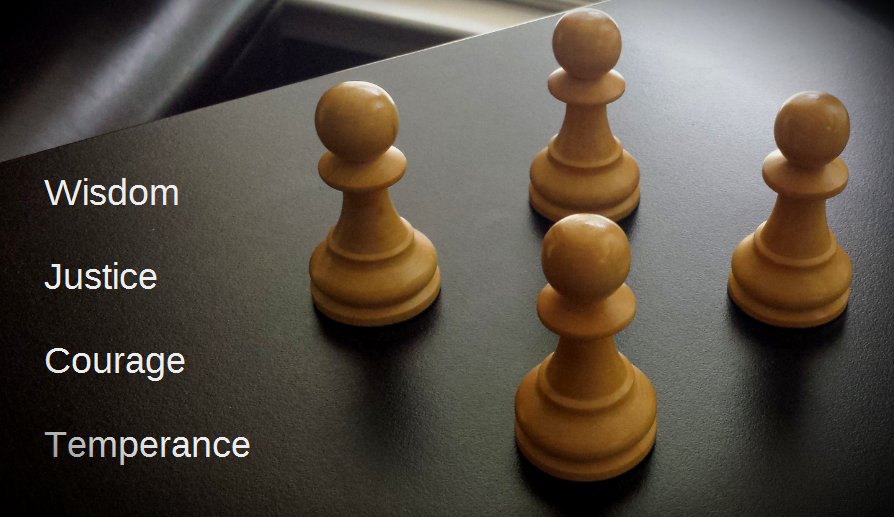
Showing posts with label temperance. Show all posts

Saturday, October 30, 2021

Letters from a Stoic 119 - On Nature as our Best Provider

On Nature as our Best Provider

The theme of this letter is: enough; Nature provides with with enough.  People, though, introduce excess.

Seneca writes variations on this them.

it does not matter whether you crave nothing, or whether you possess something. The important principle in either case is the same – freedom from worry.

...

If I am hungry, I must eat. Nature does not care whether the bread is the coarse kind or the finest wheat; she does not desire the stomach to be entertained, but to be filled.

...

Look to the end, in all matters, and then you will cast away superfluous things. Hunger calls me; let me stretch forth my hand to that which is nearest; my very hunger has made attractive in my eyes whatever I can grasp. A starving man despises nothing.

...

The wise man is the keenest seeker for the riches of nature.

...

Would you rather have much, or enough? He who has much desires more – a proof that he has not yet acquired enough; but he who has enough has attained that which never fell to the rich man's lot – a stopping-point.

Lack of contentment is a vice.  It leads to gluttony, luxury and decadence and leads further to others' resentment.

Enough is never too little, and not-enough is never too much.

...

But that which is enough for nature, is not enough for man.  There have been found persons who crave something more after obtaining everything

...

He ... who has arranged his affairs according to nature's demands, is free from the fear, as well as from the sensation, of poverty.

...

Wealth ... blinds and attracts the mob.

...

measure all things by the demands of Nature; for these demands can be satisfied

...

The Builder of the universe, who laid down for us the laws of life, provided that we should exist in well-being, but not in luxury. Everything conducive to our well-being is prepared and ready to our hands; but what luxury requires can never be got together except with wretchedness and anxiety.

...

whatever we want because of sheer necessity we accept without squeamishness.

Wednesday, October 20, 2021

Letters from a Stoic 116 - On Self-Control

On Self-Control

To topic of this letter whether it "is better to have moderate emotions, or none at all."  Seneca notes two views on the topic of emotions.  The Stoics "reject the emotions" and "the Peripatetics keep them in check."

Seneca imagines someone who argues,

it is natural for me to suffer when I am bereaved of a friend; grant some privileges to tears which have the right to flow! It is also natural to be affected by men's opinions and to be cast down when they are unfavourable; so why should you not allow me such an honourable aversion to bad opinion?

While Seneca agrees that emotions do come from Nature in order to "make the indispensable means of existence attractive to our eyes" we should nonetheless acknowledge that "this very interest, when overindulged, becomes a vice."

Vices start with good reason and with some modestly, but then can grow into a vice.

There is no vice which lacks some plea; there is no vice that at the start is not modest and easily entreated; but afterwards the trouble spreads more widely. If you allow it to begin, you cannot make sure of its ceasing.

Therefore, Seneca advocates for cutting them off before they get a foothold.

resist these faults when they are demanding entrance, because, as I have said, it is easier to deny them admittance than to make them depart.

While a wise man can control himself and his emotions, we who are not yet wise should not trust ourselves to think we can control them so easily.  He quotes Panaetius:

you and I, who are as yet far removed from wisdom, should not trust ourselves to fall into a state that is disordered, uncontrolled, enslaved to another ... Let us not expose this unstable spirit to the temptations of drink, or beauty, or flattery, or anything that coaxes and allures.

Panaetius was referring to the emotion of love but Seneca observes this advice may be applied to all emotions.  He advises strong caution when it comes to dealing with emotions.

let us step back from slippery places; even on dry ground it is hard enough to take a sturdy stand.

Seneca then takes on the claim that the Stoic philosophy is too hard!  One may argue,

Your promises are too great, and your counsels too hard. We are mere manikins, unable to deny ourselves everything. We shall sorrow, but not to any great extent; we shall feel desires, but in moderation; we shall give way to anger, but we shall be appeased.

He thinks humans are perfectly capable of keeping motions in check, but instead our love of our vices is so strong we make excuses for ourselves.

And do you know why we have not the power to attain this Stoic ideal? It is because we refuse to believe in our power. Nay, of a surety, there is something else which plays a part: it is because we are in love with our vices; we uphold them and prefer to make excuses for them rather than shake them off. 

...

The reason is unwillingness, the excuse, inability.

Friday, October 8, 2021

Letters from a Stoic 113 - On the Vitality of the Soul and Its Attributes

On the Vitality of the Soul and Its Attributes

The letter answers the question: are virtues living things?  In sum, Seneca replies they are not; the soul is a living thing, which possesses virtues.  He discusses this somewhat extensively, and then ends the letter with some thoughts on bravery and discipline.

Seneca doesn't think talking about this question is a good use of time, but nonetheless answers it.

You wish me to write to you my opinion concerning this question, which has been mooted by our school – whether justice, courage, foresight, and the other virtues, are living things.  By such niceties as this, my beloved Lucilius, we have made people think that we sharpen our wits on useless objects, and waste our leisure time in discussions that will be unprofitable.

He gets directly to the answer.

The soul, men are agreed, is a living thing ... But virtue is nothing else than a soul in a certain condition; therefore it is a living thing. Again, virtue is active, and no action can take place without impulse. And if a thing has impulse, it must be a living thing.

The soul is a living thing with impulses.  Virtue is active and prompts us to have an impulse, which we then act on.

We may have multiple virtues (or vices) in our soul, but we are still one living soul.  Just like the hydra has many heads, it is still one soul.

each separate head fighting and destroying independently. And yet there is no separate living thing to each head; it is the head of a living thing, and the hydra itself is one single living thing.

Later in the letter, Seneca repeats and succinctly states his answer to the main question.

Every living thing acts of itself; but virtue does nothing of itself; it must act in conjunction with man. All living things either are gifted with reason, like men and gods, or else are irrational, like beasts and cattle. Virtues, in any case, are rational; and yet they are neither men nor gods; therefore they are not living things.

To conclude the letter, he makes the very important point that use of knowledge is what matters; not discussing and nitpicking.  He focuses on the virtue of bravery to make this point.

Teach me, not whether Bravery be a living thing, but prove that no living thing is happy without bravery, that is, unless it has grown strong to oppose hazards and has overcome all the strokes of chance by rehearsing and anticipating their attack.

What is bravery?

It is the impregnable fortress for our mortal weakness; when a man has surrounded himself therewith, he can hold out free from anxiety during life's siege.

He quotes Posidonius:

"There are never any occasions when you need think yourself safe because you wield the weapons of Fortune; fight with your own! Fortune does not furnish arms against herself; hence men equipped against their foes are unarmed against Fortune herself."

Then he focuses on Alexander the Great, who conquered nations, but could not conquer himself and ended up killing his own friends.

he, the conqueror of so many kings and nations, was laid low by anger and grief! For he had made it his aim to win control over everything except his emotions.

Seneca writes a few, excellent reminders, which we all would do well to repeat to ourselves often.

Self-Command is the greatest command of all.

...

I must be just without reward.

...

May I take pleasure in devoting myself of my own free will to uphold this noblest of virtues.

...

Those who wish their virtue to be advertised are not striving for virtue but for renown.

Wednesday, July 28, 2021

Letters from a Stoic 86 - On Scipio's Villa

On Scipio's Villa

There is not much to commentate for this letter.  It is a rather simple exercise which Seneca practices, contemplating the voluntary exile of Scipio and how some people grow accustomed to luxury.  Below are the few highlights from the letter.

he showed moderation and a sense of duty to a marvellous extent.

admire this magnanimity, which led him to withdraw into voluntary exile

For he was accustomed to keep himself busy and to cultivate the soil with his own hands, as the good old Romans were wont to do.

What a vast number of statues, of columns that support nothing, but are built for decoration, merely in order to spend money! And what masses of water that fall crashing from level to level! We have become so luxurious that we will have nothing but precious stones to walk upon.

he taught me that a tree can be transplanted, no matter how far gone in years.

Wednesday, November 4, 2020

Letters from a Stoic 31 - On Siren Songs

On Siren Songs

Fads, trends, populism, crowd favorites - I've tried to be leery of what the majority desires.  If only the majority were in favor of justice for all, temperance, courage and wisdom, then perhaps I would willingly go along with the crowd.  But usually what the crowd desires is not wise, but foolish.  They will choose the well-worn, popular path.  For this reason, I think, Seneca approves of the "impulse which prompted" Lucilius to "[tread under feet] that which is approved by the crowd.

The phrase "tread under feet" seems to mean to ignore, or oppress or put down.  Therefore, Seneca approves of the idea of going against the crowd, as long as that means one is living philosophically.

He compares the desires of the crowd to a siren song.  Odysseus had to plug the ears of his men so they would not hear the siren song, lest they succumbed to it and dash their ships into the rock.  Similarly, we must plug our ears to the calls of the crowd, which are everywhere!

the song, however, which you have to fear, echoes round you not from a single headland, but from every quarter of the world. Sail, therefore, not past one region which you mistrust because of its treacherous delights, but past every city. Be deaf to those who love you most of all; they pray for bad things with good intentions. And, if you would be happy, entreat the gods that none of their fond desires for you may be brought to pass. What they wish to have heaped upon you are not really good things; there is only one good, the cause and the support of a happy life, – trust in oneself.

Seneca warns that we must be deaf even "to those who love you most all."  What an odd thing to say.  I presume that what he means is that those who love us most, may not have embraced philosophy, and therefore, when they pray for you, they are praying that you become famous, rich, handsome, healthy or some sort of indifferent.  Or they may be praying that you don't die or become ill or fall on so-called misfortune.  Therefore, Seneca says that if you really want to be happy, plead with the gods that your loved ones' prayers are not answered.

I'm not so sure how sound this advice from Seneca is.  I'm not so sure a practicing Stoic would forbid his loved ones to pray for such things, nor would he go out of his way to pray to the gods to not answer the prayers of his loved ones.  At best, a practicing Stoic may be completely nonplussed by such prayers and would not worry if those things came (or not) into his life.  He would view them as indifferents regardless if they came (or not) due to prayers from a loved one or otherwise.

The next part of the letter delves into the subject of work; and I assume he means the subject of gainful employment.  Work, itself, is an indifferent.  Therefore, work can be infused with either virtue or vice.  A practicing Stoic, then would attempt to make his work noble.

Make yourself happy through your own efforts; you can do this, if once you comprehend that whatever is blended with virtue is good, and that whatever is joined to vice is bad. Just as nothing gleams if it has no light blended with it, and nothing is black unless it contains darkness or draws to itself something of dimness, and as nothing is hot without the aid of fire, and nothing cold without air; so it is the association of virtue and vice that makes things honourable or base.

Knowledge of how to make good use of things (indifferents) is the art of philosophy.  The good, therefore, is knowledge.  And evil is lack of knowledge.  Your human craft is to gain knowledge about how to be a good human.

Just as a carpenter learns to work with wood and there are varying degrees of craftsmanship in different carpenters due to knowledge and practice (as well as lack of knowledge and practice), so too we can apply this analogy to what it means to be a good human being.  A good human will seek justice for all (not only justice for some, and not at the expense of others' justice).  A good human being will be disciplined and temperate in eating, entertainment, learning and working.  A good human being will demonstrate courage and honesty.  A good human being learns and demonstrates wisdom.  The medium for the carpenter is wood.  The medium for a human being is work and life.

in order that virtue may be perfect, there should be an even temperament and a scheme of life that is consistent with itself throughout; and this result cannot be attained without knowledge of things, and without the art which enables us to understand things human and things divine. That is the greatest good. If you seize this good, you begin to be the associate of the gods, and not their suppliant.

The 'art' he refers to is philosophy.  If we learn and practice this art, we become equal with the gods.  It does not matter our lot in life, the choice we have is our response to our lot and circumstances in life.  Is our soul worthy to the challenge?  Will you take the path less travelled or will you follow the crowd?

The unique part of *you* has a choice, regardless of circumstances.

What we have to seek for, then, is that which does not each day pass more and more under the control of some power which cannot be withstood. And what is this? It is the soul, – but the soul that is upright, good, and great. What else could you call such a soul than a god dwelling as a guest in a human body? A soul like this may descend into a Roman knight just as well as into a freedman's son or a slave. For what is a Roman knight, or a freedman's son, or a slave? They are mere titles, born of ambition or of wrong. One may leap to heaven from the very slums. Only rise

"And mould thyself to kinship with thy God."

Thursday, January 10, 2019

Epictetus Discourses 1.19 - How should we behave towards tyrants


This is an interesting chapter, especially if viewed in the context of modern-day corporate society, in which many of us make a living.

Vice presidents, executives, managers, divisional managers ... all of them wield power and authority.  But we fail to realize that the only power and authority they have is what we give them.  That power only exists in our own mind.  Their power and authority is not real; not in the slightest.

Epictetus cuts to the heart of the matter.  The only real power is the power of controlling our desires and aversions and our impulse control; in short, self-discipline (see verses 2-4).

And how should we view authority figures at work and in government?  We ought give them attention like we give our dishes or pets attention.  It is a necessity that has to be done; we do what we need to do, but nothing else.  The dishes are dirty, we wash them.  The horse needs to be groomed; we groom it.  There is no need to bow or show deferential treatment to them.  I think we can observe protocol if warranted, but we must be very wary of thinking they have more power or authority than us.

But those managers and bosses can fire you!  They can cut your pay!  Good point; then I'll watch out for them and perform my own due diligence.  I'll do what I must for my own self-care, but I don't have to make my whole life dependent on them.  Soon, they will be retired, they will forget about you - they'll be golfing, going on vacations, put into a retirement home and soon, dead.

"For when the [president, VP, manager] says to someone, 'I'll [fire you, cut your pay, excommunicate you]' one who attaches value to his [job, position, membership] will reply, 'No, have pity on me,' while one who attaches value, by contrast, to his choice will say, 'If you think that will do any good, [fire away]'

To which, the president or VP or manager might say, "You don't care?" And you can respond, "Not in the least."  And the tyrant might say, 'I'll show you that I am [the president, VP, general authority].'

And then you respond, "How will you do that?  Zeus has set me free.  Do you really suppose that he would allow his own son to be turned into a slave?  You're master of my carcass, take that."  (see v. 8-10, p. 44).

Later, Epictetus talks about sacrifices and offerings to gods.  And he asks a poignant question, "Yet who has ever offered up a sacrifice because his desires are rightly directed?  Or because his motives are in accord with nature?  For we offer up thanks to the gods for those things in which we place our good" (v. 25, p. 46).

Let this be your guide for having the proper attitude in dealing with "people of authority."

Tuesday, January 23, 2018

Commentary on Meditations: B10:15-18

The time you have left is short. Live it as if you were on a mountain. Here or there makes no difference, if wherever you live you take the world as your city. Let men see, let them observe a true man living in accordance with nature. If they cannot bear him, let them kill him - a better fate than a life like theirs.

No more roundabout discussion of what makes a good man. Be one!

Keep constantly in your mind an impression of the whole of time and the whole of existence - and the thought that each individual thing is, on the scale of existence, a mere fig-seed; on the scale of time, one turn of a drill.

Consider any existing object and reflect that it is even now in the process of dissolution and change, in a sense regenerating through decay or dispersal: in other words, to what sort of 'death' each thing is born.

Life is short.  Some will spend what little time they have left, filling their life with pleasures and desires.  Stoics spend what little time they have left, trying to practice courage, temperance, carrying out justice and living wisely.  Stoics will live this way whether living in a city or on a mountain - it makes no difference.  The world is their city.  To put this thought in modern day vernacular: the world is my safe zone.  So many try to cut out a "safe zone" where they won't or can't be hurt.  But by so doing, they cheat themselves of precious learning experiences.  The world should be your safe zone - interact with everyone - treat everyone with respect and kindness - teach and help others to see wisdom.  Marcus goes so far as to say that if the world can't bear you, then let it kill you!  It's better to die free than live in slavery.

While you live - while you can - be a good man now!

Never, ever forget the little speck of dust you dwell on; and the minute speck of time you occupy in eternity.  This puts everything in proper perspective.

Everything is in the process of changing and dying.  Each second, minute, hour, day we march closer to decay and dissolution.  Life is short.  Use your time now to be a good human.

(see also Citadel p. 171, 291)

Wednesday, October 25, 2017

Commentary on Meditations: B6:46-47

Just as all the business of the amphitheatre and such places offends you as always one and the same sight, and this monotony of the spectacle bores you, so it is too with your experience of life as a whole: everything, up or down, is the same, with the same causes. How much longer, then?

Think constantly of all the sorts of men, of various professions and of all the nations on earth, who have died: and so bring your thought down to Philistion, Phoebus, and Origanion. Pass now to the other classes of men. We too are bound to change our abode to that other world, where there are so many skilled orators, so many distinguished philosophers - Heraclitus, Pythagoras, Socrates - so many heroes of old, so many later commanders and kings.

Add Eudoxus, Hipparchus, Archimedes; add other men of penetrating intellect, men of great vision, men dedicated to their work; add rogues, bigots, and even satirists of this transient mortal life, like Menippus and his kind. Reflect of all of these that they are long dead and buried. So is this anything terrible for them - or indeed for men whose very names are lost? In this world there is only one thing of value, to live out your life in truth and justice, tolerant of those who are neither true nor just.

Marcus speaks to me!  I cannot help but see, on every side, the "business of the amphitheater."  Star athletes and movie stars and the drama that follows them ad nauseam on TV and the Internet.  Observing high school students and listening to their conversations is also revealing - about the repetitive topics, the endless selfies and the total lack of living an examined life.  I am convinced more and more of Marcus' opinion that forty years is as good as ten thousand years of seeing all that can happen in this life (B7.49 & B11.1).

While Marcus reminds us to not get worked up into a frenzy, nor be bothered by the business of the amphitheater, it is always wise to recall that everyone passes on to death and oblivion.  Pillars of men and nations disappear and succumb to The Agent of Change.  What's left?  What's the purpose?  What is it all about?  For the Stoics, tt is about attaining a life of moral excellence or virtue.  Is living a life of wisdom, justice, courage, temperance and other virtues the true purpose of our existence? For the Stoics, the answer is yes. They believe living these virtues is resting on the foundation of bedrock which won't move or shift with the tides of fads and popularity.  For this Stoics, this is the only thing of value.  Pursuit of fame, fortune, notoriety, pleasure / avoiding pain, are all futile and useless endeavors.

(see also Citadel p. 48, 164, 177-178, 228, 242, 276, 286)

Wednesday, May 24, 2017

Commentary on Meditations: B3:6

If you discover in human life something better than justice, truth, self-control, courage - in short, something better than the self-sufficiency of your own mind which keeps you acting in accord with true reason and accepts your inheritance of fate in all outside your choice: if, as I say, you can see something better than this, then turn to it with all your heart and enjoy this prime good you have found. But if nothing is shown to be better than the very god that is seated in you, which has brought all your own impulses under its control, which scrutinizes your thoughts, which has withdrawn itself, as Socrates used to say, from all inducements of the senses, which has subordinated itself to the gods and takes care for men - if you find all else by comparison with this small and paltry, then give no room to anything else: once turned and inclined to any alternative, you will struggle thereafter to restore the primacy of that good which is yours and yours alone. Because it is not right that the rational and social good should be rivalled by anything of a different order, for example the praise of the many, or power, or wealth, or the enjoyment of pleasure. All these things may seem to suit for a little while, but they can suddenly take control and carry you away. So you, I repeat, must simply and freely choose the better and hold to it. 'But better is what benefits.' If to your benefit as a rational being, adopt it: but if simply to your benefit as an animal, reject it, and stick to your judgement without fanfare. Only make sure that your scrutiny is sound.

The four virtues, as Marcus notes here are:
- justice
- truth (wisdom)
- self-control (temperance)
- courage

Practicing and living these virtues is how you find contentment and happiness.

Furthermore, practicing the three Stoic disciplines, where are:
- self-sufficiency of your mind (discipline of assent)
- act in accord with true reason (discipline of action)
- accept your inheritance of fate (discipline of desire)

will bring you contentment and happiness.

Marcus boldly tells himself, if he can find anything better than these virtues and disciplines, he should turn to it with all his heart.  But if nothing is better than the god within, which has controlled his impulses and which has helped him scrutinize (examine or inspect closely and thoroughly) his thoughts and has helped him "take care of men", then he should not give any room for other philosophies.

He says it isn't right that rational and social good should be "rivaled" by any different order - such as vanity, power, prestige, money and pleasure.  All these pursuits may bring short-term happiness and joy, but ultimately they control you and carry you away to a place that ends in dejection and a life of emptiness.  (This is why Stoicism wins over Hedonism).

Arriving at this conclusion, what is left?  To "simply" and "freely choose the better and hold to it."

(See also Citadel pp. 124, 179, 186, 237-238, 242, 265)

Thursday, May 11, 2017

"Might as well be you; might as well be now."

This post comes from the Daily Stoic email that showed up in my inbox today.  I loved it so much, I printed it off and hung it on our kitchen wall for the whole family to see.  I made one modification to the email; changing the very last word from "today" to "now"

"Before the U.S Civil War, Ulysses S. Grant was a down-and-out officer working in his father’s leather goods store. By the end of the war, he was the highest ranking general in the country and soon enough would be the president. He would say at one point, faced with the incredible difficulty of that war, “The task is a big one and has to be performed by someone.” And so he did it. Simple as that.

"It’s doubtful that Grant ever read the Stoics. He was a simple, straightforward man. But he was Stoic in almost everything he did. We’d all do well to pick up a bit of that attitude for the difficulties we face: Our relationship had been neglected and begun to fall apart. Our company needs to be turned around. Our grades are in the toilet. Our house is filthy and needs to be cleaned. The answer: “The task is a big one and has to be performed by someone.” And then do it.

"No more, no less. Someone has got to do it. Might as well be you. Might as well be now."

Monday, April 3, 2017

Commentary on Meditations: B1:17

From the gods: to have had good grandparents, good parents, a good sister, good teachers, good family, relatives, and friends - almost everything; and that I did not blunder into offending any of them, even though I had the sort of disposition which might indeed have resulted in some such offence, given the occasion - it was the grace of the gods that no set of circumstances likely to show me up ever arose.  Marcus was grateful for the fate he was born into.  I can only imagine that had he been born into a less prosperous fate, and had he learned and practiced Stoicism through some other way, he still would have been grateful for his unique set of circumstances.  He loved his fate.

That I was not brought up any longer than I was with my grandfather's mistress, and that I kept my innocence, leaving sexual experience to the proper time and indeed somewhat beyond it. He learned temperance and self-discipline.

That I came under a ruler and a father who was to strip me of all conceit and bring me to realize that it is possible to live in a palace without feeling the need for bodyguards or fancy uniforms, candelabra, statues, or the other trappings of suchlike pomp, but that one can reduce oneself very close to the station of a private citizen and not thereby lose any dignity or vigour in the conduct of a ruler's responsibility for the common good. This is one of the things as to why Stoicism appeals to so many. Some philosophies would have you meditate on a mountain, but Stoicism would have you meditate in a palace or a forest.  Your inner citadel is where you are, regardless of circumstance or position in life.

That I was blessed with a brother whose character could spur me to care for myself, and whose respect and affection were likewise a source of joy to me. We are meant to work with others. Whether they spur us to improve or support us with love and respect, humans were meant to for each other.

That my children were not born short of intelligence or physically deformed. He was grateful for the good health of his children.

That I did not make further progress in rhetoric, poetry, and the other pursuits in which I could well have been absorbed, if I had felt this my right path. He could have easily gone down a path that would have caused him to be self-absorbed.

That I was quick to raise my tutors to the public office which I thought they desired and did not put them off, in view of their youth, with promises for the future. He was not stingy with his power; he remembered those who helped him.

That I came to know Apollonius, Rusticus, Maximus. He was grateful for friendships and relationships that were put in his path.  What can we learn from this?  We may occasionally wonder why we have to be in the same room as so-and-so.  But have we asked the question: what can I learn from them?  We might be surprised by discovering new friends in unexpected crossroads.

That I acquired a clear and constant picture of what is meant by the life according to nature, so that, with regard to the gods, their communications from that world, their help and their inspiration, nothing now prevents me living the life of nature: my falling somewhat short, still, is due to my own fault and my failure to observe the promptings, not to say the instructions, of the gods. He learned early that humans are endowed with reason and logic and that we are to live according to this gift from god.  Dumb animals of the field know nothing but to eat, drink, defecate and procreate.  Humans possess a nature to learn, to grow, to find the best in life, to serve others.  When humans live according to nature, they serve others; they think; they question; they learn and grow. Also, if we are keen and observant in our life, we will discern guidance and help from all sorts of circumstances. This discernment is the ability to hear promptings from the universe or from god.

That my body has held out so far in a life such as mine. That I never touched Benedicta or Theodotus, and that later experience of sexual passion left me cured. Again, gratitude for good health and self-discipline.

That, though I was often angry with Rusticus, my behaviour never went to the point of regret. Once again, the theme of self-control.

That my mother, fated to die young, nevertheless lived her last years with me. Marcus showed his gratitude for his mother.

That whenever I wanted to help someone in poverty or some other need I was never told that there was no source of affordable money: and that I myself never fell into similar want of financial assistance from another. He displayed a desire to help others financially and he was grateful that he was in a position to help others in that regard.

That my wife is as she is, so submissive, loving, and unaffected: and that I found no lack of suitable tutors for my children. That I was given help through dreams, especially how to avoid spitting blood and bouts of dizziness: and the response of the oracle at Caieta, 'Just as you use yourself.' Again, more gratitude on his part.

That, for all my love of philosophy, I did not fall in with any sophist, or devote my time to the analysis of literature or logic, or busy myself with cosmic speculation. All these things need 'the help of gods and Fortune's favour'. In this final part of chapter 17, Marcus notes that these small choices he made earlier in life led him to a course for which he is currently grateful.  Hindsight showed him the wisdom of his earlier choices.

Wednesday, March 29, 2017

Commentary on Meditations: B1.16 - Marcus' Adoptive Father (Antoninus Pius)

From my [adoptive] father: gentleness, and an immovable adherence to decisions made after full consideration. In other words, be good natured (gentle) and kind.  Think fully and well. Then make your choice.
no vain taste for so-called honours. He was humble and did not 'get a big head' regarding his authority.

stamina and perseverance. He had the ability to stick to something. A more modern and oft-used term is "grit.” One demonstrates grit by not backing down and staying with something to the end.

a ready ear for anyone with any proposal for the common good; to reward impartially, giving everyone their due; experience of where to tighten, where to relax.  As emperor, I’m sure Marcus had lots of people approach him with proposals.  He did his best to execute justice for all; giving people a chance and by giving them a fair shake.
putting a stop to homosexual love of young men. There is not much to say here other than to note Marcus worked on self-discipline.

a common courtesy, excusing his court from constant attendance at dinner with him and the obligation to accompany him out of town, and those kept away by some other commitment always found him no different towards them. Marcus’s adoptive father was not a prima-donna.  He did not demand constant attention.  He was not haughty.

focused and persistent in deliberation in council, never satisfied with first impressions and leaving a question prematurely. I find this counsel good in today's attention-deficit-disorder world, where we can't keep our attention focused on something for more than five minutes.  Marcus learned from his adoptive father to be focused on a task at hand until it was completed.  He was not content with just hearing the talking points; rather he delved into topics and did not leave a question too early.

the concern to keep his friends, with no extremes of surfeit or favouritism. Marcus learned from him to be just with his friends and acquaintances.

his own master in all things, and serene with it. This is another observation related to self-discipline and being content.

foresight for the longer issues and unfussy control of the least detail. This part really rings true for the line of work I’m in.  We call it “having a general interest mindset.” Some people we deal with want to "haggle" about smaller amounts and they lose sight of the bigger picture.  For example, on a $1 million project, there is no point in chasing down ten-dollar issues. Or, in another example, rather than taking a hard stance on a feature which will only benefit a subset of customers for little to no value, one can agree to align with other stakeholders in order to keep the general interest united.

the check he put in his reign on acclamations and all forms of flattery. He did not let power get to his head and did not succumb to flattery.

his constant watch on the needs of the empire, his stewardship of its resources, and his tolerance of some people's criticism in this area.  He did his duty and was a good steward.  He allowed people to give him feedback and probably accepted some of it.

no superstitious fear of the gods, nor with men any populism or obsequious courting of the mob, but a sober steadfastness in all things, and nowhere any vulgar or newfangled taste. He acted according to nature; and man's nature is to act with reason.  Therefore, he did not give into superstitions nor was he swayed by the popular sentiment of the day; a sentiment which embraces the “here today, gone tomorrow” attitude.  He focused on timeless values and on reason and logic that was permanent.

In those things which conduce to the comfort of life - and here fortune gave him plenty - to enjoy them without pride or apology either, so no routine acceptance of their presence or regret in their absence. He knew his position, and did not apologize for it, or feel guilty about it, nor did he flaunt it before others.  He accepted his fate.

the fact that no one would ever describe him as a fraud or an impostor or a pedant, but rather as a man of mellow wisdom and mature experience, beyond flattery, able to take charge of his own and others' affairs. He was genuine and not two-faced.  Again, he did not let his power and position get to his head.  He simply did his duty.

Further, his high regard for genuine philosophers - for the other sort he had no hard words, but easily saw through them. To me, this speaks of the ability to see through charlatans who are people who falsely claim to have a special knowledge or skill, but in fact they are frauds. A true philosopher is someone who genuinely is searching for rock-solid truth.

sociability, too, and a sense of humour, not taken to excess; sensible care of his own body, neither vain nor valetudinarian, but not neglectful either, so that his own attention to himself left very little need for doctors, doses, or applications. Like his adoptive father we should remember that we are social beings and have a need and a duty to interact with others regularly.  Our social-ability improves when we have a smart sense of humor (not too dry and not in excess, but just right). We should also demonstrate sensible care of our body. Some may spend hours in the gym; or hours prepping and eating the best foods, while some spend no time in the gym and eat only twinkies. Both approaches to care for the body are not within reason. A valetudinarian is a person who is unduly anxious about their health. In sum, we should strike the right balance in taking care of our body.

Most importantly, his readiness to defer ungrudgingly to those with some special ability - it might be in literary expression, or the study of laws or customs or any other subject and to give them his own active support to reach acknowledged eminence in their own specialities. Some people want to be the know-it-all and will be such a know-it-all, they begin to misrepresent the truth.  The concept here is that we can and ought to defer to experts.  With that said, it would be wise to collect 360-degree feedback, to ensure as much relevant data and information has been collected.  The point here is to not be an expert in all things, but to also leverage others' knowledge.

Acting always in accordance with tradition yet not making the preservation of tradition an overt aim. When I lived in Guatemala, I often would visit homes where a sticker on the door said, "we were born catholic, we are catholic, we will die catholic."  There is no sense in preserving something that does not need to be preserved for its own sake.  If I were to amend that sentiment, I would say, "I was born to find truth, I seek the truth, I will die yearning for the truth."  We should ever be seeking and amending our outlook and philosophy on life in accordance with reason and we should not hold on to anything just for the sake of tradition.

further, no liking for change and chance, but a settled habit in the same places and the same practices. As the March 28th Daily Stoic entry says, "chaos ensues from not having a plan."  Stoics accept and even love their fate, but that does not mean they leave life to chance.  In every aspect, if they have the ability to have an influence on something and wish to make the world a better place, they should do so.  Excellence comes with habits, so build good ones.

to resume instantly after attacks of migraine, fresh again and vigorous for his usual work. Truly an impressive ability; to be able to suffer from illness or setbacks, but when addressed and rectified, having the ability to start anew.  Many suffer from loss of momentum when setbacks occur.

not to keep many matters secret to himself, only a very few exceptional cases and those solely of state concern.  Transparency is important.  Too often our society has learned hard lessons when people keep things in the dark.  Granted, there are times when discretion is needed, but the greater the transparency while managing risk, the better society is.

sense and moderation in such things as the provision of shows, contracting of public works, doles and distributions - the acts of a man with an eye for precisely what needs to be done, not the glory of its doing. To do things for the right reason instead of for greater fame or recognition is the better path.

He was not one to bathe at all hours; he had no urge to build houses; he was not particular about food, the material and colour of his clothes, or youthful beauty in his slaves; the fact that his dress came from Lorium, sent up from his country house there; the many details of his way of life at Lanuvium; how he handled the apologetic customs officer in Tusculum, and all such modes of behaviour.  Related to the care of the body, he did not take these matters to excess.  He did what was prudent.  He may have been a minimalist.

Nothing about him was harsh, relentless, or impetuous, and you would never say of him that he 'broke out a sweat': but everything was allotted its own time and thought, as by a man of leisure - his way was unhurried, organized, vigorous, consistent in all. In brief he was deliberate and ordered, in all aspects of his life.

What is recorded of Socrates would apply to him too: that he could regulate abstinence and enjoyment where many people are too weak-willed to abstain or enjoy too indulgently. It is a sad state of affairs that some people seem to ruin the fun for everyone else.  One of the key concepts I learned from my humanities and history if civilization courses in college was “moderation in all things.” If more people were moderate in their consumption, we would not have the ills that society possesses today.  There would be no drunk driving or binge drinking or pollution in the ocean.

Strength of character - and endurance or sobriety as the case may be - signifies the man of full and indomitable spirit, as was shown by Maximus in his illness. Endure life and all its trials well. Your attitude and strength of your character is everything.  Never give up. Be persistent.  Be sober.

Tuesday, March 28, 2017

Commentary on Meditations: B1.15

15. From Maximus: self-mastery, immune to any passing whim; good cheer in all circumstances, including illness; a nice balance of character, both gentle and dignified; an uncomplaining
energy for what needs to be done; the trust he inspired in everyone that he meant what he said and was well-intentioned in all that he did; proof against surprise or panic; in nothing either hurried or hesitant, never short of resource, never downcast or cringing, or on the other hand angry or suspicious; generosity in good works, and a forgiving and truthful nature; the impression he gave of undeviating rectitude as a path chosen rather than enforced; the fact that no one would ever have thought himself belittled by him, or presumed to consider himself superior to him; and a pleasant humour.

Self-mastery, also known as temperance, can be one of the most important and difficult virtues to instill within oneself. Marcus is grateful to Maximus for having learned that virtue.  In all forms, self-mastery is the gateway to finding contentment.  Whether you learn self-discipline in eating, exercise or even how you spend your leisure time, you should find ways to be in control of your desires; and master your ability to manage yourself in completing your duties.

I’m always impressed with people who demonstrate equanimity and good cheer. Your attitude is something which is ‘up to you.’ You can choose your attitude and perception of any situation. While an attitude of good cheer may not change all your circumstances, it can help you stay positive and solve your challenges more easily!

Related to your attitude is forming your character so that it is both gentle and dignified. As I think about this part of the passage, I envision a person who is not too stern, yet not too familiar. There is a right balance between in demonstrating good tact when working with people. Sometimes someone could be too formal or too stern, but equally, poor tact could be acting too informally. Furthermore, someone who strikes the right balance of demonstrating good cheer, gentleness and dignity is someone who possesses energy to always fulfill duties and solve problems without complaint.

Next, we note how Maximus was a man of his word.  We too can be someone who does what he says he will do. If you commit to something, do all that you can to keep that commitment.  Be genuine in your words; do not inflate and downplay your perception.  Speak of things as they are.  Always ensure your intentions are the best, no matter what.

Maximus was surprise-proofed and even panic-proofed! Just as something can be water-proofed so that the object is not easily damaged by water, so too can we be surprise-proofed and panic-proofed.  We should train our mind and attitude to not be surprised or panicked by anything.  Nothing should surprise or shock you, especially if you are 40 years old or older, for, after that age, you will have generally 'seen it all'.  One way to proof yourself to surprise and panic is to practice preparing for your death as well as preparing for the worst of circumstances. This practice is called premeditatio malorum.

As you prepare for difficult events and circumstances, be reserved and steady in your reactions so as to be able to apply reason and logic to any circumstance.  Do not be hurried or hesitant, rather be deliberate in your thoughts and actions.  Furthermore, be resourceful and always upbeat in your attitude. Don't be downcast or wring your hands or be angry or doubtful of everyone's motivations.

As to generosity in good works, we are reminded that there cannot be too much of a truly good thing. It would be absurd to think that someone produces too many good works. Therefore, that advice of being generous with good works, rests on a sound assumption. Along with this advice, we are to forgive quickly and frankly and not hold any grudges. In brief, forgive and forget, then move on, and simply be honest in all you do.

Maximus demonstrated an undeviating rectitude as he was a moral person and chose the right path without ever needing to be forced into that path. So too should we choose what is morally good rather than being forced into it.

Lastly, Maximus lived and acted in a way which never gave the impression that he was belittling others, nor did he give the impression that he was superior to them. He simply had a good nature about him.


Friday, November 25, 2016

choosing to be temperate

on my six mile walk this morning, i was reflecting on the amount of food i ate yesterday (thanksgiving holiday) and how i felt ill from all the food.

to be honest, i don't feel i ate all that much.  but i did get a headache after the big dinner.  i drank lots of water after eating, but still the headache persisted.

my next thought was: i get headaches when i don't eat and when i do eat; so why not simply choose not to eat (so much) and endure the headache anyway; why the need for the double-injury?

i won't die if i eat so little.  i can choose not to eat.  i can choose contentment when presented with food.  simply put, eating won't make me happy.  like charlie brown, lucy and the football - i know i'll be betrayed for eating.

spend time reading a book; walking; playing chess; playing with your children; listening to music.

there is so much to do with time rather than spending it in the kitchen "wallowing in pickles, sweets and sauces."

eating does not make you good.

restraint and moderation are virtues.

Sunday, November 20, 2016

thoughts on temperance

Temperance
be discrete
avoid excess
be organized
be modest
be self-discipline

a man who has great self-discipline or restraint isn't someone who feels no inkling of desire but someone who overcomes his cravings, by abstaining from acting upon them.


Sunday, June 12, 2016

green & love wage war on weight

the nba finals are in full swing (well, it might be over soon, actually, if the warrriors beat the cavs in game 5), this article is a very good read and extols the virtue of self-discipline.  we would all tend to think nba players are special and super-human, but in fact, they face the very same issues we all face - trying to increase the virtue of temperance.


Sunday, June 12, 2016
How Draymond Green and Kevin Love wage war -- on their weight

CLEVELAND -- Kevin Love fervently believes you are what you eat. In fact, he literally counts on it.

"Not 10 almonds, not 18 almonds -- 14 almonds,'' trainer Rob McClanaghan says when discussing Love, his most dedicated client. "Kevin is exactly on point. If he's supposed to eat every two hours, then on the days when he wants to sleep in, he'll wake up, eat and go back to sleep.''

Love has so drastically altered his eating habits that his teammates heckle him on social media. He switched to a plant-based diet in 2012, with salmon and grilled chicken as his preferred entrees. He eats five to six small meals a day, and when he was traded to Cleveland in 2014, Love hired a full-time chef who prepares menus that feature organic egg whites, beet juice, shredded wheat with almond butter and protein shakes.

During a team breakfast before Game 2 of the NBA Finals, Cavs players were devouring pancakes, waffles and bacon.

Not Love.

"Kev had two bran muffins and a banana with skim milk,'' Cavs forward Richard Jefferson says. "He eats like an 80-year-old lady who's trying make sure she's regular.''

Love often transports his own meals -- a pair of kale salads and grilled chicken -- on the team plane rather than be tempted by a postgame spread that might be high in calories and carbohydrates. The ribbing, he says, comes with the territory.

"They look at [me] kind of funny when I walk in with a Whole Foods bag or something,'' Love says. "That's not generally the best thing to do when you've got a group of teammates that'll clown on you.''

But Love recognizes he needs to eat this way -- especially as his Cavs prepare to play their 101st game of the season. There's a misconception that NBA players can ingest whatever they like during a long, rigorous NBA regular season that spans six months and 82 games and optimally another two months of playoffs -- yet all that toil and sweat and training does not translate into a free culinary pass.

NBA players, in truth, are just like us. They count calories. They crave late-night snacks. They drink wine, margaritas or a frosty beer, sometimes excessively. When they're stressed, they turn to comfort foods, whether it's the homemade meatballs their mother made when they were young, or the chicken fettuccine Alfredo that Love's mom has perfected.

"People definitely think athletes can eat whatever they want because they run it off,'' says Dr. Mike Roussell, a nutritionist who works with numerous pro athletes, including Lakers center Roy Hibbert. "Even in the front office, some have that belief. I was blown away by the number of [NBA] athletes who were buying chicken fingers at the arena before a game or going to Subway late at night after the game. They are literally just like everyone else.''

But players are now beginning to embrace the notion that proper nutrition provides an edge.

Consider Draymond Green: The Warriors forward dropped to the 35th pick in the 2012 draft in part because his body fat, vertical leap and conditioning were subpar. But after his rookie season with Golden State, Green dropped 20 pounds by eliminating what he called the "bad carbs,'' including his beloved tacos from a Vargas & Sons Tortillas in Saginaw, Michigan. Green says his lighter build has alleviated chronic knee pain, improved his stamina and enabled him to him cut down on mental errors.

Even LeBron James, whose chiseled physique is the envy of many of his NBA peers, has undergone what some would call a dietary transformation, turning heads in 2014 when he released pictures on social media of his slimmed-down frame. It was the result, he said at the time, of a low-carb diet.

Golden State center Andrew Bogut dropped 22 pounds after the Warriors won the championship last June by eliminating processed sugars. The catalyst, he says, was an Australian documentary entitled, "Is Sugar the New Fat?" After watching it, Bogut began checking boxes for content. He didn't alter his workout, just eliminated the sugars -- and the "energy crashes" that accompanied them. Bogut says he used to mock "label readers."

"Now," he says, "I'm one of them."

CHARLES BARKLEY SAYS there is one NBA truth that is indisputable: "You can't make a living playing basketball if you are fat or out of shape,'' he says.

Barkley knows all about the slippery slope of weight gain. In fact, he might be the only NBA player in history who purposely packed on pounds to sabotage which team would select him in the 1984 NBA draft.

When Barkley, who at Auburn was aptly nicknamed The Round Mound of Rebound, visited with the Philadelphia 76ers a month before the draft, he weighed 292 pounds. Owner Harold Katz was enamored with the power forward and told Barkley he wanted to draft him, but Katz expected Barkley to slim down before they'd select him with the fifth overall pick.

"Harold said, 'Let's see how dedicated you are,' '' Barkley recalls. "When you come back two days before the draft, I expect you to weigh 284.''

Barkley went to Houston, trained every day, cut out sugars, limited his alcohol intake and loaded up on fruits and vegetables. He whittled himself down to 280 pounds, but a few days before draft, his agent, Lance Luchnick, informed him the Sixers were over the salary cap and would only be able to offer him a contract worth $75,000 (no rookie salary cap existed at the time). Barkley panicked. He didn't want to be shortchanged on his first NBA contract.

"I decided," he says now, " 'I'm going to make sure the Sixers don't draft me.' "

Over the next 48 hours, Barkley says, he and Luchnick embarked on what can only be described as an eating bender. They found a Denny's and gorged on double orders of the Grand Slam breakfast -- two pancakes, two eggs, bacon, sausage, hash browns and bread. Then, for good measure, Barkley ordered an extra stack of flapjacks. For most of the afternoon, Barkley guzzled soda and milkshakes and feasted on lobster rolls. At dinner, he ordered two T-bone steaks.

"Then we got up the next morning and did it all over again,'' Barkley says.

By the time he arrived at the Sixers' facility for his weigh-in, he had ballooned to 301 pounds. "[Katz] called me every name in the book,'' Barkley says. "He was so mad. Nobody knew about my crazy eating binge, but I figured, 'Hey, it worked.' ''

“People definitely think athletes can eat whatever they want because they run it off. [But] they are literally like everybody else.

”- Dr. Mike Roussell, nutritionist On draft night, a smug Barkley sat back, waiting to see which unlucky player would go to the Sixers instead of him. He recalls with clarity hearing newly minted NBA commissioner David Stern uttering the words, "With the fifth pick in the 1984 NBA draft, the Philadelphia 76ers select ... Charles Barkley!"

"I'm sitting there f---ing shocked,'' Barkley says. "I can't believe it. I say to my agent, 'Oh, great. Now I'm fat and broke!' ''

Solutions emerged: The Sixers freed up some cap space, and paid Barkley $2 million over four years. And Barkley discovered a lifelong mentor in Moses Malone, who quickly informed him that being fat and lazy wouldn't be acceptable. A chagrined Barkley slimmed down to 255 pounds, and within two seasons was named to the first of 11 consecutive All-Star teams.

FORMER PHOENIX SUNS center Oliver Miller loved pizza.

Danny Ainge, who played with Miller in Phoenix, says the 10-year veteran, who at his peak weighed over 375 pounds, ate so much of it that the Suns took drastic measures, including hospitalizing him and hooking him up to IV fluids.

"But then they found out he was ordering Domino's from the hospital," Ainge says. "They had to put a security guard outside the room.''

Barkley also played with Miller. "When we were on the road, we'd see the [pizza] boxes piled up outside his room,'' Barkley says. "I never understood when guys were making all that money why they couldn't stop eating. It seems crazy to me.''

In his current role as president of basketball operations of the Boston Celtics, Ainge has dealt with players who similarly struggled with weight: Glen "Big Baby" Davis (whose contract with Boston included a weight clause); Jared Sullinger; even former Georgetown big man Mike Sweetney, whom Ainge believed had the skills of a 10-year NBA pro.

"First of all, I don't think anyone that is overweight wants to be overweight,'' Ainge says. "They want to be in great shape, and most of them work at it, to some degree. A lot of big guys, like Oliver and Big Baby, were good players who could all play heavy. That was part of the problem. They could be somewhat effective, but they were never as good as they could be.

"And, eventually, it catches up with you.''

BUT IT'S NOT as easy as simply losing weight. Becoming lighter, in many cases, often doesn't translate into peak performance.

Roy Hibbert, for example, dropped nearly 30 pounds at the request of former Pacers coach Jim O'Brien, who favored an up-tempo playing style. He figured if Hibbert lost weight it would make him faster and improve his performance (it did neither). But when the Pacers hired Frank Vogel, who preferred physical, smash-mouth basketball, in 2011 he asked Hibbert to put the weight back on.

By then, Hibbert, who in his early years ordered from fatty, late-night hotel menus, had hired Roussell, who counseled Hibbert on how to gain back what nutritionists call "clean weight.'' A main tenet of Roussell's plan revolves around one question: Could you eat this same meal in two hours? If not, Roussell says, the portion is too big.

"The hardest thing is when I'm left to my own devices,'' Hibbert says now. "That's why I've taken it out of my own hands.''

Today, Roussell plans all of Hibbert's meals and has them delivered to the team hotels when he's on the road. Occasionally, Roussell will even attempt to satisfy some of Hibbert's cravings. Roussell has, for instance, created a healthy chili cheese dog by finding a chicken hot dog that has only three grams of fat and eight grams of protein ("I spent months looking for it,'' he says), extra lean ground beef, reduced-fat cheese and a high fiber non-refined grain bun. Roussell also devised a healthy lobster macaroni and cheese (whole-wheat elbow noodles are the key ingredient).

Yet even the best nutritionist can't transform everything into a healthy option.

"There's no such thing as a low-calorie red velvet cake,'' Roussell says.

NBA VETERANS, LIKE most everyone else, eventually come to the same conclusion: The older they get, the more diligently they have to watch their diet.

When Jefferson was young he ate steak three nights a week on the road. Those days are over, he says, adding that he also has banned Doritos from his home. "I'm going to be 36 in a few weeks,'' Jefferson says. "I can't afford that stuff anymore.''

In 1988, Brian Shaw was a Celtics rookie whose typical pregame meal included a Big Mac, fries and a soda. In 2014, then the head coach of the Denver Nuggets, Shaw was aghast to see pizza and nachos in his locker room before the game, and blamed his team's slow starts on the greasy grub. He swept it all into the trash and replaced it with salads and chicken.

McClanaghan says his client, Derrick Rose, took the NBA by storm and won rookie of the year but was fueled by fast food. "With Derrick, it used to be a Burger King pregame meal,'' McClanaghan says. "The first two years he wouldn't even look at a salad. But now, as he's growing older, he's eased into it.''

Breaking those habits, says Shawn Windle, the head strength and conditioning coach of the Indiana Pacers, requires that players view their on-court performances as by-products of what they consume -- something Windle says is a constant struggle.

"One of the frequent conversations I have with our players is, 'I had pizza before the game and I had 25 [points]. Tell me how it will be different if I eat salmon and broccoli,' '' Windle says. "You try to explain to them they might not have the same energy or stamina, or that the pizza might not show up in the box score tonight, but it may tomorrow.''

Even LeBron acknowledged before Game 3 of the Finals that he has adjusted his diet as he has gotten older. His latest concession? Cutting out junk food.

"But it's very difficult to be in a household with three kids when they run around and put [the junk food]) in your face,'' James says. "Every now and then I dab in it to make them happy -- but actually it makes me happy.''

DALLAS MAVERICKS COACH Rick Carlisle says the one thing he has learned in his 27 years in the league is not to judge a player by his body type. Mavericks guard Raymond Felton, for instance, is more diligent about his diet than Russell Westbrook, yet you'd never know it by a simple eye test. Two basketball players -- two entirely different bodies and skill sets -- can follow the same diet and do the same workouts and still have dramatically different results, simply based on their genetics.

Roussell says LeBron's "genetic gift" is the reason his so-called "low-carb diet" in 2014 generated such quick and startling results.

"They were touting this low-carb eating plan -- except it wasn't low carb at all,'' says Roussell, who has not worked with James. "His 'low-carb' salad had a mango plopped in the middle of it. It had chutney. It had carbs and sugar like nobody's business. But that's not unusual. Even people with the best resources get terrible advice when it comes to nutrition.''

And while genetics certainly play a role in dieting and a players' ability to gain and lose weight, the temptations on the road also bring undeniable challenges. Limiting nightlife is a formidable obstacle to health during the season. Alcohol, a staple of NBA nightlife, has calories and often leads to poor late-night food choices, not to mention a penchant for missing breakfast the next morning. The "after-hours" cycle, two team general managers interviewed for this story admit, is one of the most difficult for their players to break. "If I could keep my guys in at night after games, we'd add five wins to our season,'' one Western Conference GM said.

ALTHOUGH THE CAVALIERS enjoy teasing Love about his meal choices -- "he eats like a woman's fitness champion that needs to be in a bikini flexing,'' Jefferson cracks -- they are quick to add they respect Love for the discipline he has displayed in his efforts to remain lean.

Love didn't always exemplify such dietary diligence. He was once an easily winded, lumbering big man at UCLA who weighed north of 270 pounds. When he first came to the NBA, he admittedly shied away from setting up in the post because he was worried his limited lift wouldn't allow him to get his shot off.

“If I could keep my guys in at night after games, we'd add five wins to our season.

”- Western Conference GM, on the late-night NBA cycle, which often includes unhealthy eating decisions McClanaghan says Love is more explosive now, better able to create space for himself with his step-back jumper and is a better ball handler, a direct result of improved mental sharpness and reduced fatigue from dropping 30 pounds.

Now during their offseason workouts, Love can train for a solid 60 minutes without bending over, a significant departure from his early days at UCLA and in Minnesota, when his added weight required a change of shirt and shorts hourly because he was sweating so profusely.

"When he first got to the NBA, he'd be shot at the end of games,'' McClanaghan says. "Now he has the same energy the whole time.

"Kevin has made a serious effort with this. He looks at it as an investment. I'd say he achieved it with his [$114 million] contract.''

Love has been counting almonds for more than five seasons now. Bogut has avoided all processed sugars for 11 months, but still craves Cadbury chocolate and Australian Mars bars, a treat he'll allow himself during the offseason, he says. Green, for his part, struggled in the early days of his low-carb crusade, but admits now that's it's simply part of his routine. "Just like eating bad was normal," he says, "now eating healthy is normal.''

As for LeBron, chutney or no chutney, anything that strengthens his game -- low-carb, high-carb or somewhere in between -- should send potential defenders scurrying for their own low-carb program -- sans mango, of course.